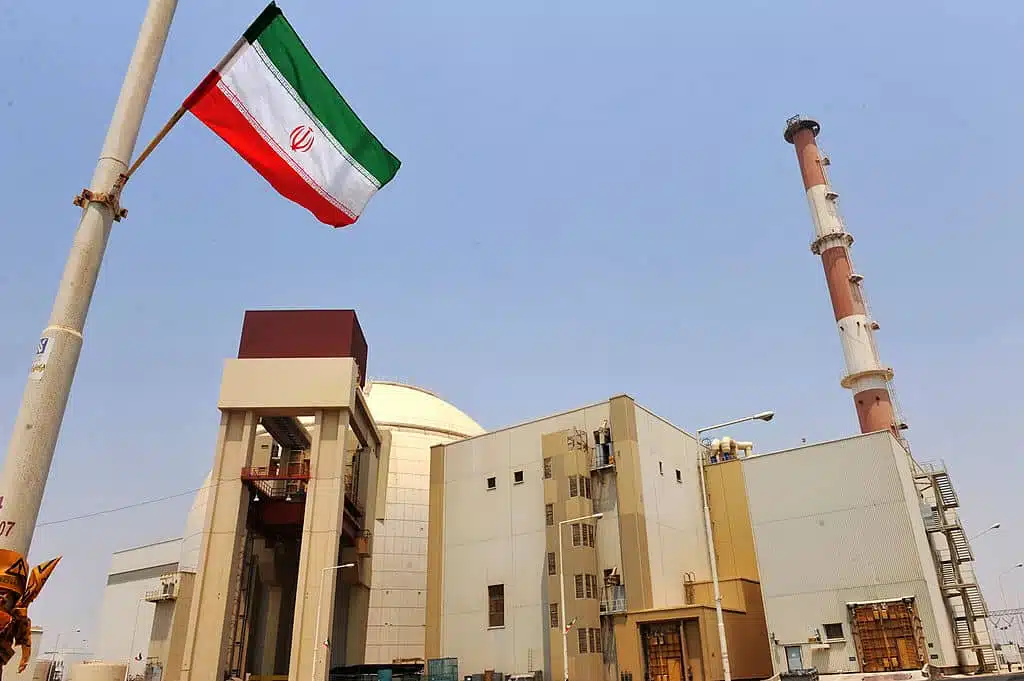
Iranian officials have publicly threatened Rafael Grossi, head of the International Atomic Energy Agency (IAEA), following his disclosures about the extent of Iran’s illicit uranium enrichment activities, according to Breitbart.
Ali Larijani, an advisor to Iran’s Supreme Leader Ayatollah Ali Khamenei, stated on social media that Iran would “settle accounts” with Grossi after the current conflict ends. This threat comes in the wake of recent Israeli and U.S. strikes on Iranian nuclear sites and amid heightened tensions over Iran’s nuclear program.
Grossi, who has led the IAEA since 2019, has overseen inspections of Iran’s nuclear facilities and repeatedly reported that Iran has accelerated its uranium enrichment. On July 12, the IAEA formally declared Iran in violation of its nuclear non-proliferation obligations for the first time in nearly two decades.
According to Breitbart, “Grossi, speaking to Argentina’s Radio Mitre last week, detailed that Iran possesses enough material to manufacture anywhere between six to eight nuclear bombs, but stressed that this does not mean that Iran currently possesses a complete nuclear weapon.”
“They already have it [the material], they already have it,” Grossi said. “That is to say, they have not accumulated 90 percent, but if they want to do so, it is a step further, let’s say.”
The threats against Grossi intensified after Iranian Foreign Ministry spokesman Esmaeil Baghaei accused him of betraying the Nuclear Non-Proliferation Treaty (NPT) and turning the IAEA into an accomplice in what Iran calls an “unjust war of aggression” against the country. Baghaei claimed Grossi’s actions deprived NPT members, like Iran, of their rights under Article 4 of the treaty.
Grossi, in response, clarified in an interview with CNN that IAEA reports on Iran’s nuclear activities are not intended to justify military action. He emphasized that decisions regarding military strikes are political and not based on IAEA findings.
The threats against Grossi are particularly notable given Argentina’s history with Iranian-backed terrorism. In the 1990s, Iran, through its proxy Hezbollah, was responsible for two major terrorist attacks in Buenos Aires: the 1992 bombing of the Israeli embassy and the 1994 attack on the Argentine-Israeli Mutual Association (AMIA), which together killed over 100 people and injured hundreds more. Argentine courts formally declared Iran and Hezbollah responsible for these attacks in April 2024.
Last week, Argentine President Javier Milei labeled Iran an enemy of Argentina, referencing these attacks and reiterating his country’s support for Israel.