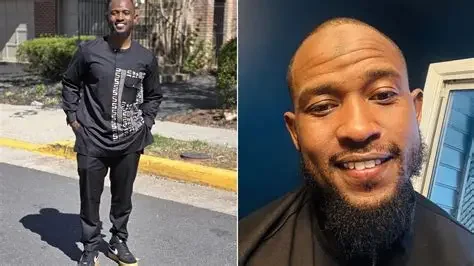
The suspect who opened fire at Old Dominion University on Thursday—killing an instructor and injuring others—has been identified as a former National Guard member previously convicted of attempting to support ISIS, according to a report from the New York Post.
Authorities say the attacker, 36-year-old Mohamed Bailor Jalloh, entered a classroom inside ODU’s Constant Hall and asked those inside whether it was an ROTC course. After someone confirmed that it was, he allegedly began firing, striking the instructor multiple times, law-enforcement sources told the Post.
The victim, described as a retired military officer who had been teaching the ROTC class, was transported to a nearby hospital where he was later pronounced dead, sources said.
According to officials cited in the report, a cadet in the classroom confronted the gunman during the chaos. The student reportedly stabbed Jalloh, stopping the attack and killing him before additional people could be harmed.
The suspect had previously drawn federal attention nearly a decade earlier. Jalloh was arrested on July 3, 2016, “for attempting to provide material support to the Islamic State of Iraq and the Levant.” The following year, he was convicted and received an 11-year prison sentence. Jalloh was released from prison in December 2024.
Right Line News journalist Eric Daugherty noted that Jalloh was a “migrant from western Africa.” Meanwhile, FBI Director Kash Patel said investigators are examining the shooting “as an act of terrorism.”
Additional details about Jalloh’s past emerged from federal records. The Department of Justice said that Jalloh, a naturalized U.S. citizen originally from Sierra Leone, previously served in the Virginia National Guard before becoming a follower of Anwar al-Awlaki, the late leader of al-Qaeda in the Arabian Peninsula.
During a six-month stay in Africa, Jalloh allegedly met with individuals connected to ISIS. In one meeting—observed by an FBI informant—he reportedly spoke about wanting to carry out his own attack, according to the Justice Department.
Jalloh told the FBI source he believed launching an attack during Ramadan—spanning roughly mid-February through mid-March—was “100 percent the right thing,” the DOJ said.
After returning to the United States, he attempted unsuccessfully to obtain firearms in North Carolina. He later visited a gun dealer in northern Virginia where he purchased an assault rifle that had been made inoperable before leaving the store. Authorities arrested him the following day, according to federal officials.
Following his arrest, Jalloh’s brother, Cherner Jalloh, told The Intercept that the situation amounted to another case of “a ‘Mohamed’ that got set up.”
“The FBI used his love for those being oppressed against him by inciting him in all manners that they deemed fit,” Cherner claimed.
He added that Jalloh viewed the unidentified FBI informant as “an older brother” and depended on him for “knowledge about what is going on in the Middle East.”
Jalloh’s sister, Mariatu Jalloh, similarly argued that he had been “manipulated” by the informant.
“The government is taking statements and actions that had nothing to do with one another and putting them together to paint a certain picture.…They’re connecting dots,” she said.
During his sentencing hearing, Jalloh publicly attempted to distance himself from ISIS, citing his links to the terrorist organization as “the most devastating [mistake] I have ever decided to make in my life.”
“I’m very, very sorry for what I have done. I did not intend to cause any harm to anyone. And I want to say — I want to say, every time I see any atrocities that ISIS commits, I am disgusted by it because I know this is not what I want to be a part of,” he said, according to a transcript obtained by CBS News.