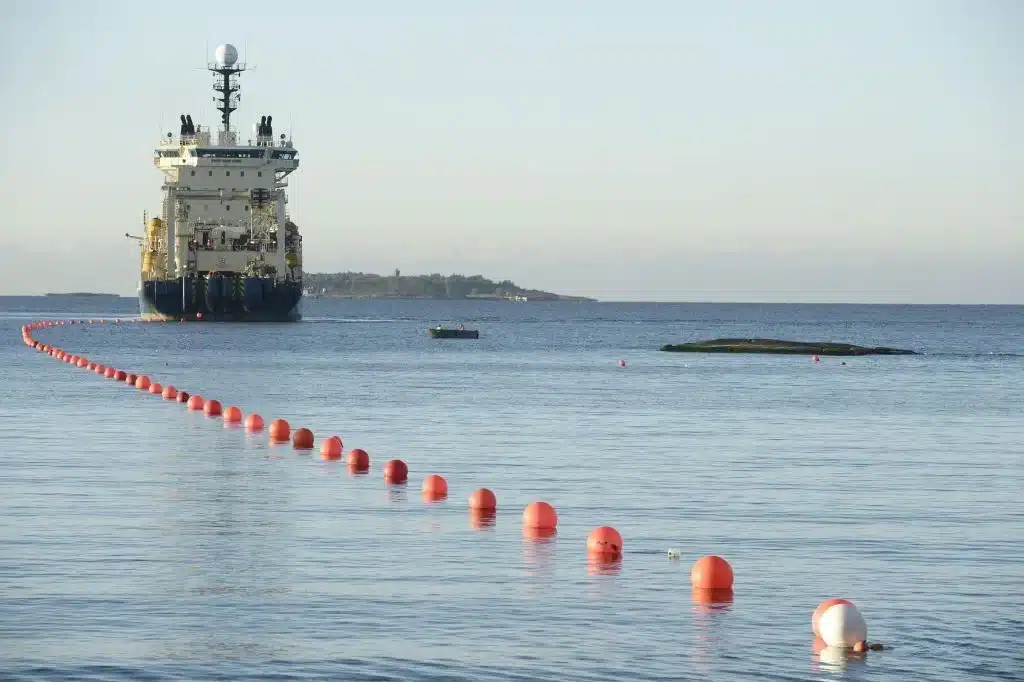
The global network of undersea cables—responsible for transmitting 99% of the world’s data and enabling roughly $10 trillion in financial transactions each day—has emerged as a critical vulnerability for the United States, Fox News reports. Experts warn that adversaries such as China and Russia are increasingly focused on this infrastructure as a strategic pressure point.
Andrew Badger, chief strategy officer at defense tech firm Coalition Systems and a former Pentagon official, cautioned that these cables function as the “nervous system” of modern life. He argued that rival nations are investing heavily in ways to disrupt them, while the U.S. and its allies lag behind in defensive measures. According to Badger, a coordinated attack on subsea cables could severely impact internet access, banking systems, energy markets, and military communications, triggering widespread economic disruption and political instability.
Concerns over these risks have prompted action in Washington. In April, Senators John Barrasso (R-Wyo.) and Jeanne Shaheen (D-N.H.) introduced the bipartisan Strategic Subsea Cables Act of 2026, aimed at improving the protection and resilience of this infrastructure. Barrasso emphasized the cables’ central role in global connectivity and finance, underscoring their importance to both economic stability and national security.
Recent developments have heightened these fears. China’s Ministry of Natural Resources announced a successful deep-sea test of a specialized device capable of cutting armored cables at depths of up to 3,500 meters. Meanwhile, incidents involving damaged cables—some allegedly linked to Chinese vessels—have been reported near Taiwan, where around 30 disruptions have occurred in recent years, occasionally knocking out communications for extended periods.
Similar unexplained cable disruptions in Europe and other regions have raised suspicions of coordinated “gray-zone” tactics. These operations are designed to stay below the threshold of open conflict while still probing defenses and exerting pressure. Badger described this approach as a form of hybrid warfare, noting that seemingly accidental events, such as anchors dragging across the seabed, can provide plausible deniability.
The geopolitical stakes are especially high in the Taiwan Strait, a key flashpoint in U.S.-China relations and a vital corridor for technologies underpinning the artificial intelligence economy. China, which claims Taiwan as its territory, could use cable disruptions as a deterrent against U.S. involvement in a potential conflict. Badger warned that targeting cables connected to the United States could be intended not to achieve a direct military victory, but to undermine public support for intervention.
Still, not every cable break is the result of hostile activity. Anniki Mikelsaar of the Oxford Internet Institute noted that between 150 and 200 cable disruptions occur globally each year, most caused by accidents. At the same time, the rapid expansion of artificial intelligence is increasing demand on these networks, placing additional strain on an already critical system.
Badger’s warning comes as President Donald Trump prepares to meet Chinese President Xi Jinping in Beijing for discussions expected to include trade, artificial intelligence, and Taiwan—issues closely tied to the growing strategic importance of undersea infrastructure.