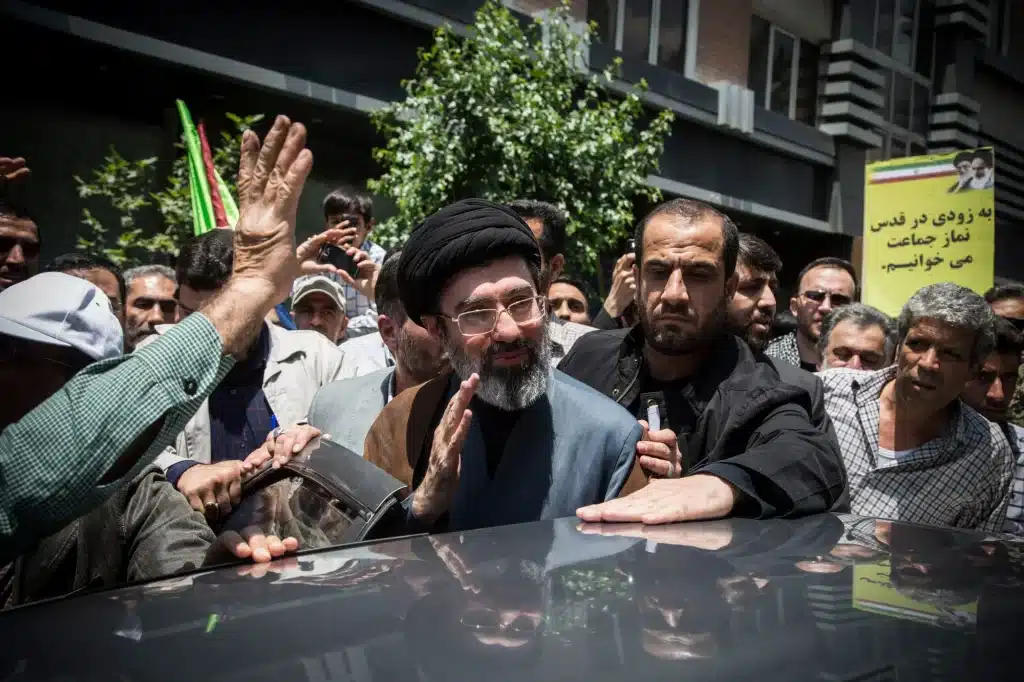
Iran’s theocratic regime has chosen its new Supreme Leader in a secretive succession that exposes the regime’s desperation and America’s successful pressure campaign. The clerical body tasked with selecting Iran’s next dictator has made their decision, but they’re too scared to announce it publicly until their chosen successor is safely hidden underground. According to jpost.com, Mojtaba Khamenei, the 56-year-old son of the eliminated Ayatollah Ali Khamenei, has been named as Iran’s new supreme leader, marking an unprecedented hereditary succession that violates the regime’s own supposed principles.
This dynastic power grab represents everything wrong with Iran’s brutal theocracy. The Gateway Pundit also reported that Ahmad Alamolhoda, a member of the Assembly of Experts, confirmed the vote had taken place but that the regime’s secretariat would delay announcing the name for security reasons. The fact that Iran’s new leader must immediately go into hiding speaks volumes about the regime’s vulnerability and the effectiveness of recent joint U.S.-Israeli operations that eliminated over 40 senior Iranian officials, including the previous Supreme Leader.
What makes this succession even more troubling for Iran’s people is that Mojtaba Khamenei reportedly holds even more extreme views than his eliminated father. The Gateway Pundit noted that he survived an airstrike but emerged as an even more hardline figure, suggesting the regime is doubling down on its anti-Western, anti-Israeli stance rather than moderating. This choice signals that Iran’s leadership learned nothing from recent military setbacks and intends to continue its destructive path of regional terrorism and nuclear ambitions.
The secretive nature of this transition also reveals the fundamental weakness of Iran’s so-called Islamic Republic. A legitimate government doesn’t hide its leaders or conduct succession planning in underground bunkers. The regime’s paranoia about announcing their choice publicly demonstrates how effectively American and Israeli pressure has rattled Iran’s power structure. Their own ideology supposedly frowns on hereditary succession, yet here they are, abandoning their principles in favor of keeping power within the Khamenei family.
This development presents both challenges and opportunities for American foreign policy in the Middle East. While a more extreme leader could escalate tensions, the regime’s obvious weakness and internal contradictions suggest continued pressure will yield results. The fact that Iran’s new Supreme Leader must start his reign in hiding proves that America’s strength-based approach is working, and we should continue applying maximum pressure until this terrorist regime finally collapses.