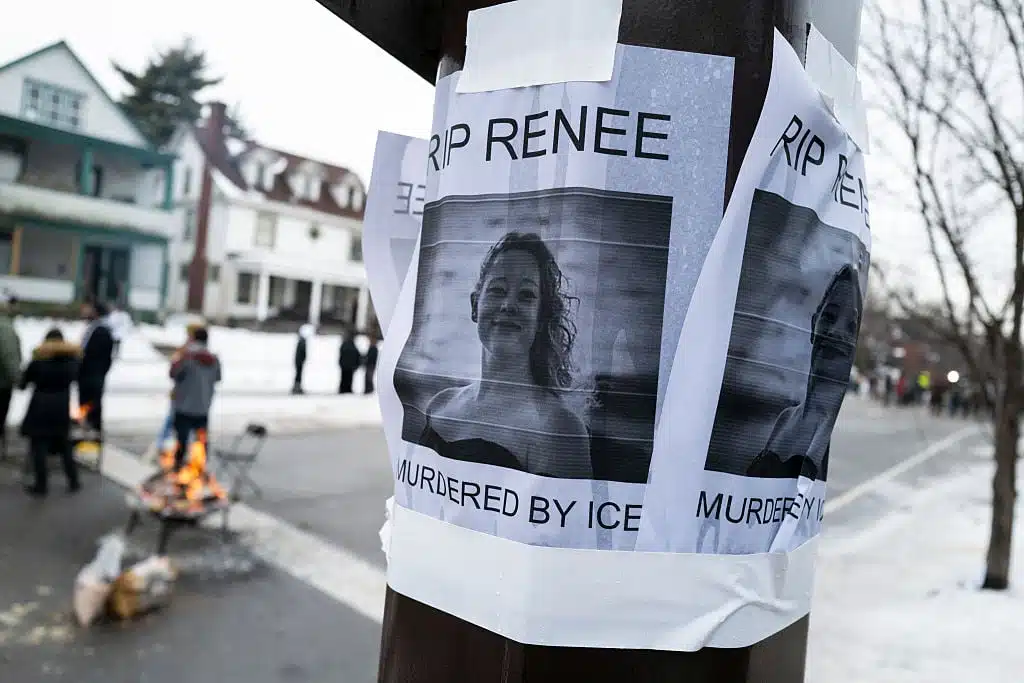
The Minnesota woman who was shot and killed by an ICE officer, was involved with a Minneapolis-area “ICE Watch” collective that monitored immigration enforcement actions and instructed activists on how to intervene with agents — often by obstructing law enforcement vehicles.
Renee Nicole Good, a mother of two, discovered the group through her child’s charter school, which boasts that it puts “social justice first” and has a stated goal of “involving kids in political and social activism.”
According to a former teacher, a lot of the parents are “activists” in their school’s “tight-knit community” reports Townhall. “She was a warrior. She died doing what was right,” a mother named Leesa, who has a child attending the charter school, stated. “[Renee Good] was trained against these ICE agents — what to do, what not to do, it’s a very thorough training,” Leesa added. “To listen to commands, to know your rights, to whistle when you see an ICE agent.”
“ICE Watch” reportedly began as a loose coalition of anti-ICE activists, but quickly grew more radical and organized as it aligned with groups such as the Twin Cities Ungovernables, a radical activist organization focused on militant resistance to federal and state authority, particularly regarding immigration and law enforcement.
“ICE Watch” groups have emerged in various U.S. cities in recent years. These chapters teach volunteers to keep tabs on ICE operations by using specialized apps, then notify trained supporters who may rush to the scene to hinder arrests being carried out.
An Instagram account believed to be run by “MN Ice Watch” urges followers to share details about ICE agents’ locations and appearances. The page has published pictures from around Minneapolis showing law enforcement personnel, their vehicle license plates, and ICE officers’ faces; much of this content comes from anonymous tips and local activist reports.
Under a section labeled “Education,” the account offers guidance on how to “de-arrest” people already taken into custody — including advice on pulling someone away from an officer’s grasp, opening a patrol vehicle’s door, or applying pressure on officers to force them to free a detainee. The document also outlines perceived advantages of stopping police vehicles.
The “de-arrest primer” states:
“If you don’t have a crowd asserting pressure there may be some interference charges that come with blocking a police vehicle that may be more easily handed down for only one or two people blocking a police vehicle, but in many cases these are misdemeanor offenses and catch and release.”