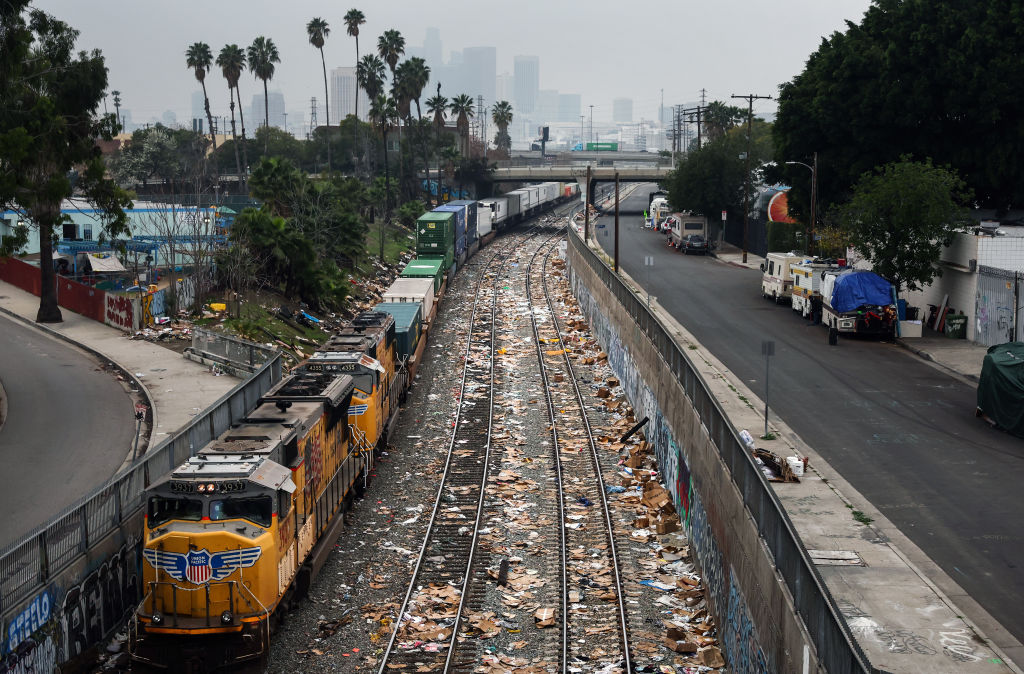
California has spent years treating theft as a minor nuisance, and the bill keeps coming due. A 14-man crew allegedly hit at least 36 freight trains across Southern California and walked off with roughly $22.5 million in cargo before federal prosecutors finally brought charges, PJ Media reports.
First Assistant U.S. Attorney Bill Essayli announced the takedown on X Thursday. “This morning we arrested a train robbery crew,” Essayli wrote. “Nathan Daniel Angel, 21, of East Los Angeles, and 13 co-defendants have been federally charged with orchestrating a $22.5 million cargo theft conspiracy.”
According to Essayli, the indictment alleges the crew burglarized freight trains for “Nike sneakers, Milwaukee tools, electronics, and other merchandise for black-market resale.” The method was brazen. “The defendants allegedly stopped trains by cutting air hoses, boarded rail cars, moved the goods to stash houses, and sold them via fence networks and social media,” he said.
This wasn’t a smash-and-grab. Prosecutors describe a full supply chain for stolen goods, from the tracks to the stash houses to online buyers, and it allegedly ran through at least 36 trains before anyone stopped it. Essayli warned that “train robberies cause enormous economic damage because of the valuable cargo involved” and said the defendants “face long federal prison sentences if convicted.” As he noted, all of them are presumed innocent until proven guilty.
Anyone who has watched Los Angeles over the past few years knows this didn’t come out of nowhere. In early 2022, the Union Pacific tracks near downtown L.A. were buried under a carpet of torn-open boxes from looted cargo containers, and the railroad reported a 160 percent jump in rail thefts in Los Angeles County over a single year. Trains are sometimes required to stop on that stretch on their way to other destinations, which left the containers sitting ducks.
PJ Media’s Catherine Salgado put it bluntly: California’s system “must be badly broken if these criminals were able to target 36 different trains before authorities finally caught up with them.” Hard to argue with that. A state that lowered the stakes for theft and went soft on repeat offenders shouldn’t be surprised when organized crews decide the rail lines are open for business.
This case is a window into what happens when a blue state stops taking property crime seriously. The losses don’t stay on the tracks. They show up in higher shipping costs, higher prices on store shelves and a message to every crew in the region that the risk is worth it. Every stolen pallet of sneakers and power tools is merchandise a business paid for and a customer was waiting on. It took federal prosecutors to send a different message. Californians deserve leaders in Sacramento willing to send it too.
Source: pjmedia.com