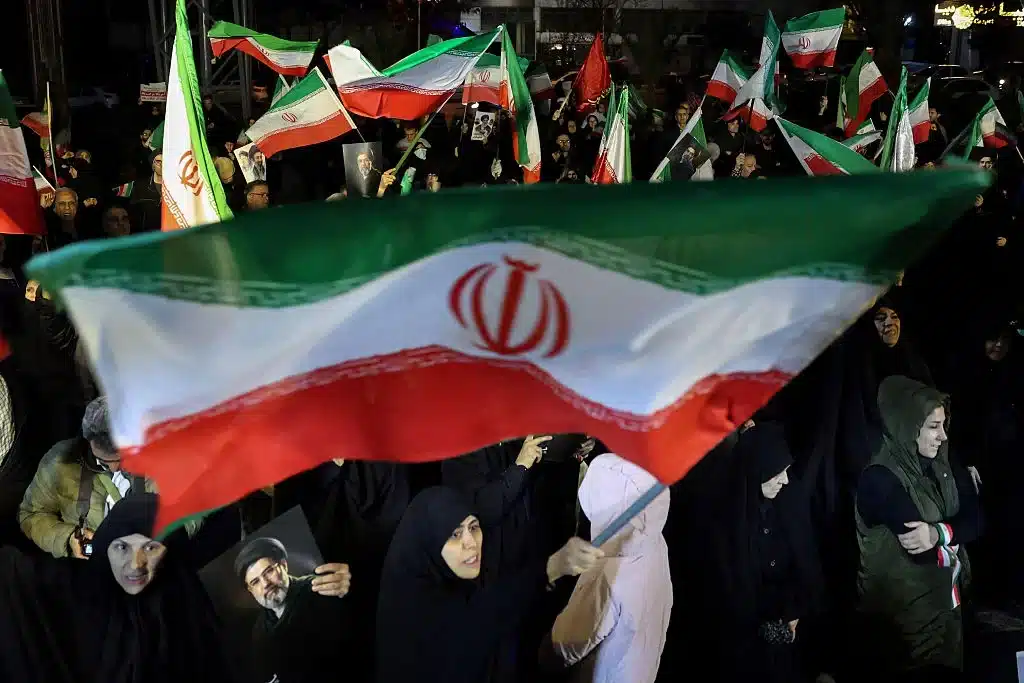
The Pentagon is actively preparing a range of military strategies for what officials are describing as a potentially “massive” final strike against Iran, as President Donald Trump’s administration considers sending up to 10,000 additional combat troops to the Middle East if diplomatic efforts break down and shipping lanes remain threatened.
According to a report from Axios on Thursday, defense officials are assembling escalation scenarios as the White House evaluates how to bring the conflict to a close should negotiations fail — particularly if Iran continues disrupting traffic through the Strait of Hormuz, one of the world’s most critical oil transit routes.
Among the proposals under consideration are operations targeting key Iranian-controlled islands that play a major role in energy exports and maritime security. These include Kharg Island, the country’s primary oil export hub; Larak Island, which is strategically positioned to monitor and potentially threaten vessels moving through the strait; and Abu Musa, along with the Greater and Lesser Tunb islands, which serve as fortified outposts near the waterway’s western entrance and are equipped with missile systems, drones, and naval mining capabilities.
Military planners are also evaluating the possibility of launching ground missions in Iran to secure the regime’s reserves of highly enriched uranium. Alternative strategies include conducting sweeping air or missile strikes aimed at eliminating those nuclear-related assets.
The Wall Street Journal reported Thursday that the Pentagon is also considering a major troop increase in the region — potentially deploying as many as 10,000 additional ground forces, including infantry and armored units. These forces would supplement existing deployments already underway, such as Marine expeditionary units and elements of the 82nd Airborne Division.
That buildup is already in motion, with Marine forces entering the region, including a unit deployed aboard the USS Tripoli, alongside Army airborne troops, including an infantry brigade currently positioned in the theater.
Additional reporting from U.S. and Israeli outlets on Thursday echoed Axios’ initial account, underscoring a growing consensus within the administration that further escalation could be necessary if diplomatic overtures fail. CNN reported that officials are actively weighing next steps should Trump’s latest attempt at engagement with Tehran collapse.
One of the key options, according to CNN, involves Kharg Island, which processes approximately 90 percent of Iran’s oil exports. Some officials believe that taking control of or disabling the facility could “totally bankrupt” the regime’s Islamic Revolutionary Guard Corps and severely limit its financial resources.
The report noted that discussions have also included potential strikes against the island’s oil infrastructure, as well as broader efforts to seize other strategically located islands near the Strait of Hormuz, with the goal of eliminating Iran’s ability to interfere with commercial shipping.
A subsequent Axios report published Thursday provided additional detail on the importance of these locations, describing Kharg as Iran’s main export terminal, while Larak sits at one of the narrowest chokepoints in the strait and hosts systems used to track and pressure passing vessels.
Abu Musa and the Greater and Lesser Tunb islands, positioned near the western gateway to the strait, function as forward-operating positions that allow Tehran to project power across the waterway and maintain leverage over maritime traffic.
Trump has continued to combine military pressure with diplomatic messaging. In a Truth Social post Thursday, he announced a ten-day halt on strikes targeting Iranian energy infrastructure — lasting through April 6 — stating the pause came at Tehran’s request while adding that negotiations are “going very well.”