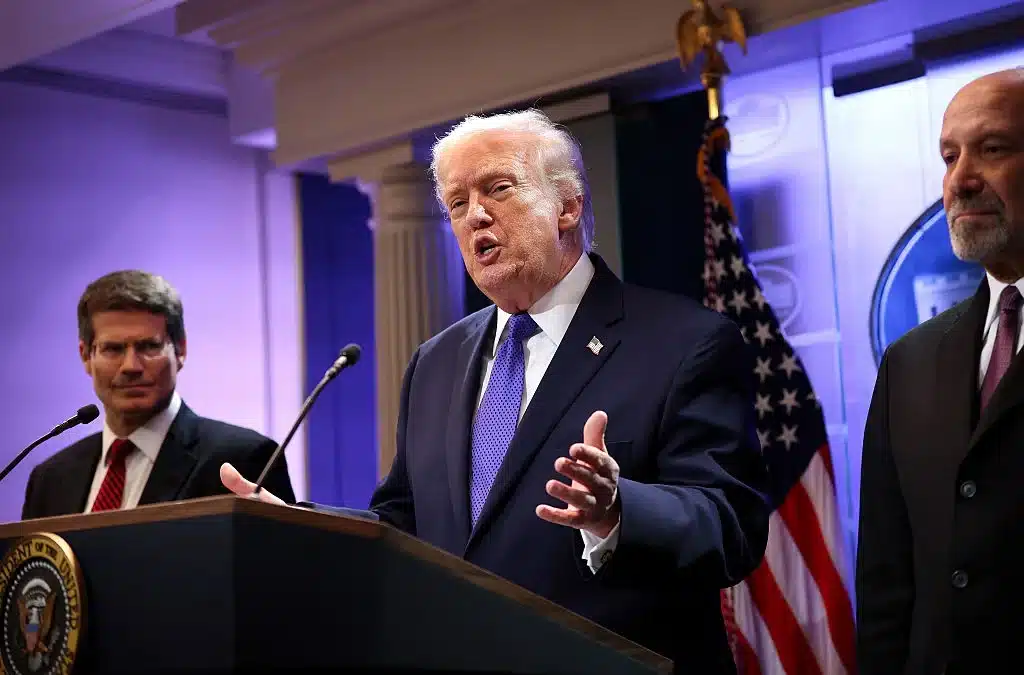
President Trump used his State of the Union address to unveil a sweeping new retirement savings proposal aimed at the roughly 56 million Americans who currently lack access to an employer-sponsored retirement plan at work. Under the plan, the federal government would provide these workers with a universal, portable savings account modeled after the Thrift Savings Plan — the retirement vehicle currently available to federal employees — and match their contributions with up to $1,000 per year. Trump framed the initiative as a matter of basic fairness, pointing out that half of all working Americans are locked out of the kind of wealth-building tools that government workers and employees at large corporations take for granted.
The workers who stand to benefit most are those who have historically been left behind by the existing retirement system. Nearly 80% of workers without an employer-sponsored plan earn less than $53,000 per year, and small business employees are disproportionately affected — 78% of businesses with fewer than 10 employees offer no retirement benefit at all. Minority workers are particularly underserved, with roughly 63% of Hispanic workers, 52% of Black workers, and 44% of Asian American workers currently lacking access to a workplace retirement plan. Experts describe the proposal as a potentially meaningful step toward universal retirement coverage, with one economist calling it a way to help "many, many people who are left out of the system" finally begin accumulating savings and benefiting from compound interest over time.
The mechanics of the plan would closely mirror the Thrift Savings Plan model, offering low-cost, index-based investment options and tax-advantaged contributions — either traditional pre-tax or Roth after-tax, though final details have not been confirmed. The $1,000 government match may be structured around the Saver's Match, a provision already set to take effect in 2027 under the Secure 2.0 Act, which offers a 50% federal match on up to $2,000 in annual retirement savings for workers below certain income thresholds. Treasury Secretary Scott Bessent indicated the legislation could move through the reconciliation process, though the final shape of the plan remains subject to congressional negotiations.
Retirement policy experts are cautiously optimistic but say critical details still need to be worked out. Chief among the concerns is ensuring the new accounts don't inadvertently disqualify low-income participants from other safety net programs like Supplemental Security Income, which carries strict asset limits. Analysts also emphasize the need for portfolio diversification guardrails, clear enrollment processes, and potentially a liquidity feature for emergency withdrawals — since many Americans currently raid retirement accounts to cover short-term financial crises, undermining their long-term savings. If those details are handled carefully, experts suggest Trump's proposal could be a genuine game changer for working-class Americans who have never had a real shot at building retirement wealth.