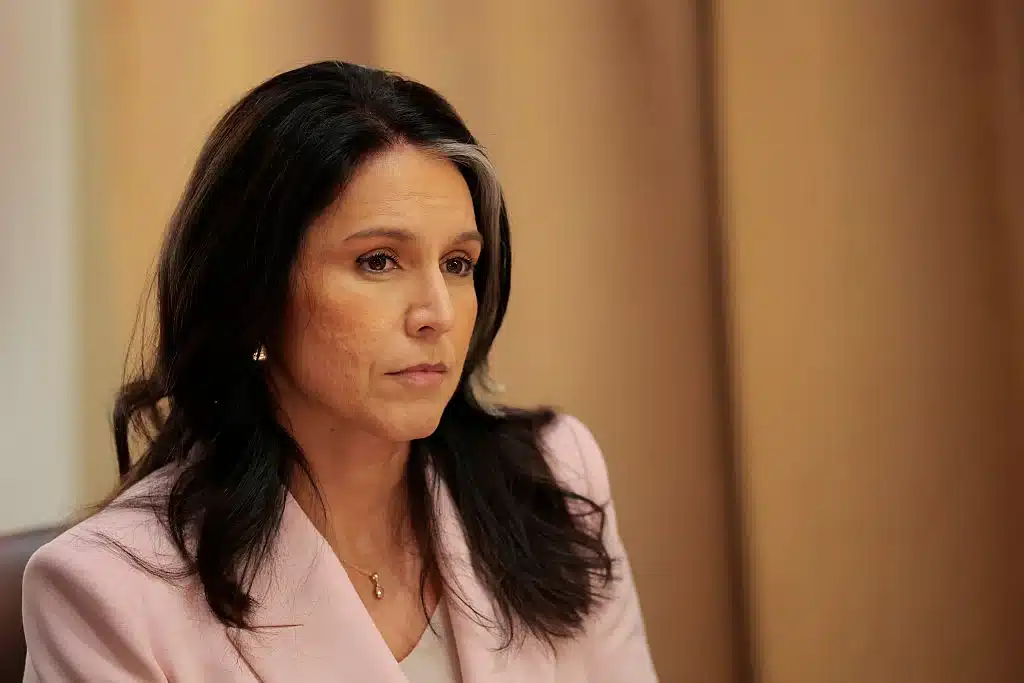
A tense standoff is emerging within the U.S. intelligence community as Director of National Intelligence Tulsi Gabbard pushes to declassify evidence suggesting Russia may have engineered the mysterious “Havana Syndrome” attacks that have afflicted hundreds of American officials, the New York Post reports. According to multiple sources, Gabbard’s call for transparency pits her against agencies accused of concealing such findings uncovered during the Biden administration.
Former intelligence officials told The Post that U.S. agencies privately concluded years ago that Moscow orchestrated the incidents, which date back to 2016. Yet this conclusion was never made public. That silence, they said, continues even after investigators reportedly obtained one of the weapons believed to be responsible — a revelation brought to light by CBS News’ 60 Minutes.
According to the outlet, “victims of Havana Syndrome, so named because it was first reported by US diplomats in Cuba, have reported the sudden onset of symptoms including vertigo, hearing loss, migraines, blindness and cognitive impairment.”
CBS reported that the Pentagon secretly authorized U.S. operatives to buy a miniaturized microwave device from a Russian criminal syndicate for roughly $15 million. Tests on animals at a military laboratory produced disturbing results: neurological damage strikingly similar to what Havana Syndrome victims endure — vertigo, migraines, hearing loss, and cognitive decline.
Scientists who have studied the phenomenon say these symptoms align closely with exposure to pulsed microwave or radiofrequency energy, technologies the Soviet Union is known to have explored extensively during the Cold War.
Top national security officials were briefed in the White House Situation Room in April 2025, where the implications reportedly left attendees “white in the face.” They learned the weapon could deliver targeted signals powerful enough to disrupt human brain tissue — possibly from a distance. Some warned that such signals could even be transmitted through ordinary electronics, including cell phones, raising fears that everyday devices could be hijacked as neurological weapons.
Army Secretary Dan Driscoll later briefed Vice President JD Vance on the discovery, sharing allegations that government officials downplayed or even suppressed the technology’s existence while victims’ suffering was minimized publicly.
Sources told The Post that much of the pushback against Gabbard’s transparency campaign is coming from within the Central Intelligence Agency. A CIA spokesperson responded carefully, saying Director Ratcliffe “supports DNI Gabbard’s efforts to review the AHI issue and looks forward to her report on this important matter.
The first known Havana Syndrome victim, a retired CIA officer publicly known as “Adam,” told The Post he was recently contacted by government investigators seeking names of those allegedly tied to the concealment. “I’ve heard Tulsi’s report is done,” he said. “Hopefully Tulsi’s team has identified the wrongdoers and will hold them accountable.”
Investigators initially planned to give implicated officials two weeks to confess before facing loss of security clearances, dismissal, or possible criminal referrals. That plan has stalled — and some suspected participants still occupy senior CIA posts, according to the outlet. “They have the people responsible, and they’re not doing anything,” the source said. “They have the list … They have the evidence. They just won’t release it.”
A spokesperson for Gabbard reportedly said, “Transparency and accountability is a top priority for the DNI,” adding that Gabbard “committed to sharing findings from ODNI’s review with the American people.”