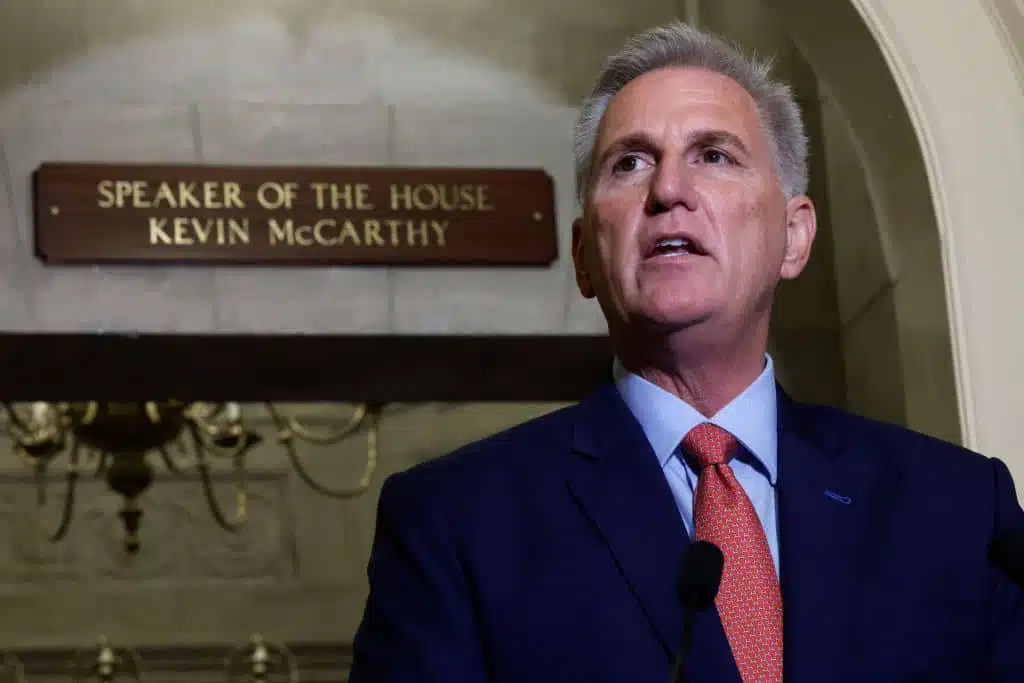
The Speaker of the House, Kevin McCarthy, has officially launched an impeachment inquiry against President Joe Biden and if successful, Biden could be the first sitting president ever to be removed from office.
Its a big ask of course, as the House is controlled by a narrow Republican majority and the Senate is a 50/50 split, but it could happen especially if the evidence is brought forth in a clear and concise manner.
American’s need to know what an impeachment inquiry is and what evidence will be presented.
The Associated Press reports that an impeachment inquiry, “is an investigation of possible wrongdoing by a federal official, such as the president of the United States, Cabinet officials or judges.” The Constitution clearly outlines this process as check on the executive branch.
As we saw under the Trump impeachment hearings, the impeachment process is two steps. It begins in the House of Representatives and then the Senate will conduct a trial to which the accused will either be acquitted or found guilty and removed from office.
The Associated Press reported, “To date, no president has ever been forced from the White House through impeachment. But former Republican President Richard Nixon resigned in 1974 as the House was preparing to take a vote on impeachment articles against him.”
The official impeachment inquiry launched by the Republicans didn’t happen overnight. The process began months ago in the House Oversight, Judiciary, and Ways & Means committees in which all committees investigated the allegations that President Biden received money/bribes from his son Hunter Biden’s business dealings throughout the world.
Now that the impeachment inquiry has been formalized, all the committees will be able to hold hearings and call witnesses with the power of the subpoena, which could include Hunter Biden and President Joe Biden.
After many of the hearings occur, the Republicans can either decide to not proceed with impeachment or move forward by filing articles of impeachment to be voted on in committees then onto the House floor. It is only after the House votes to impeach that the Senate then takes control and begin a trial of the president.
The AP reports “The trial is similar to what’s seen in the legal system, with the senators acting as jurors and select House members acting as prosecutors, or impeachment managers. The chief justice of the Supreme Court presides over that process. If the Senate approves an article of impeachment with a two-thirds vote of “guilty,” the president is convicted and removed from office. If all the articles are rejected, the president is acquitted.”